NEWS
AND CURRENT ACTIVITY
FROM LATE JANUARY 2026
TO LATE JUNE 2026
LE MONT-SUR-LAUSANNE
(SWITZERLAND)
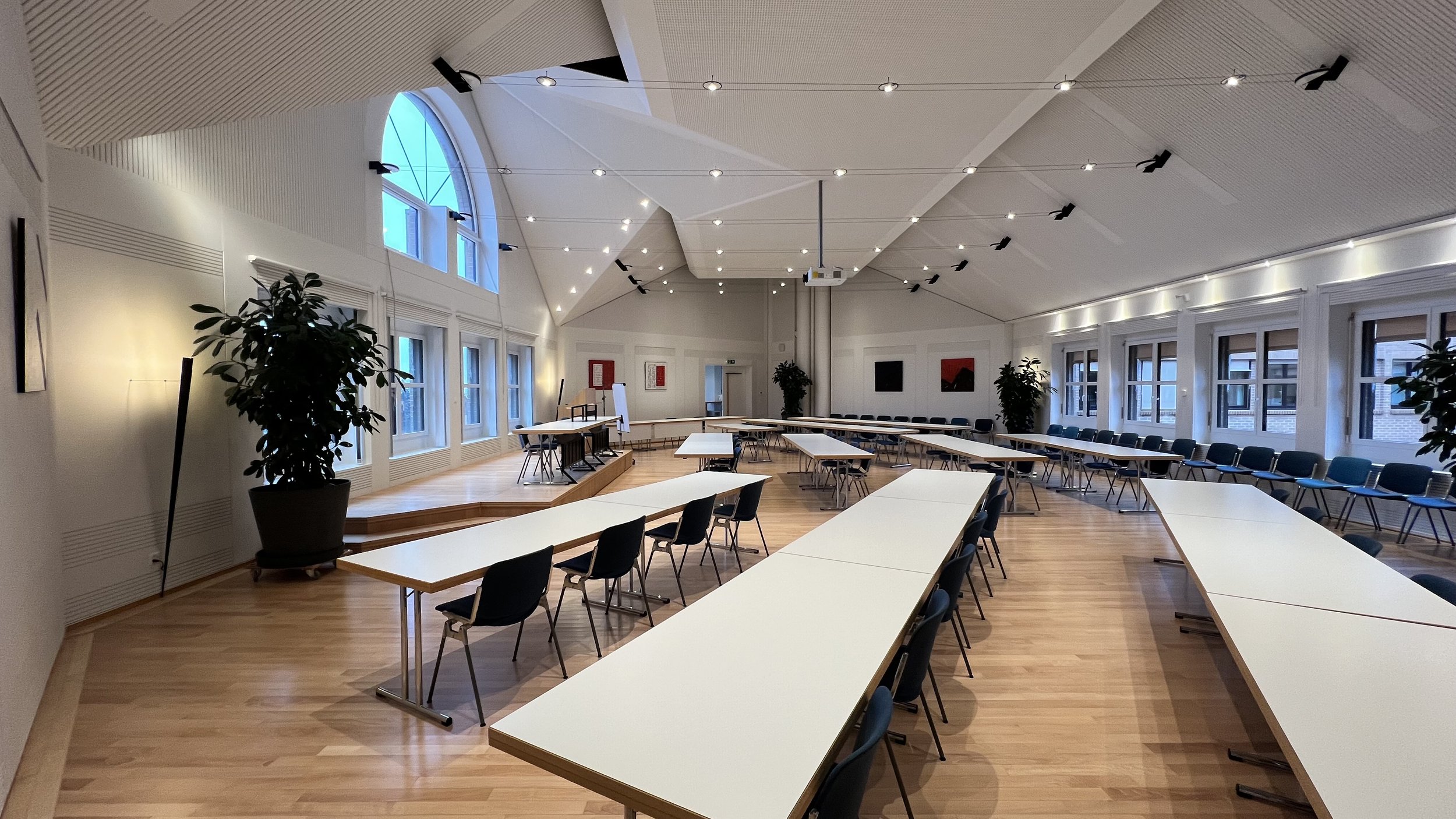
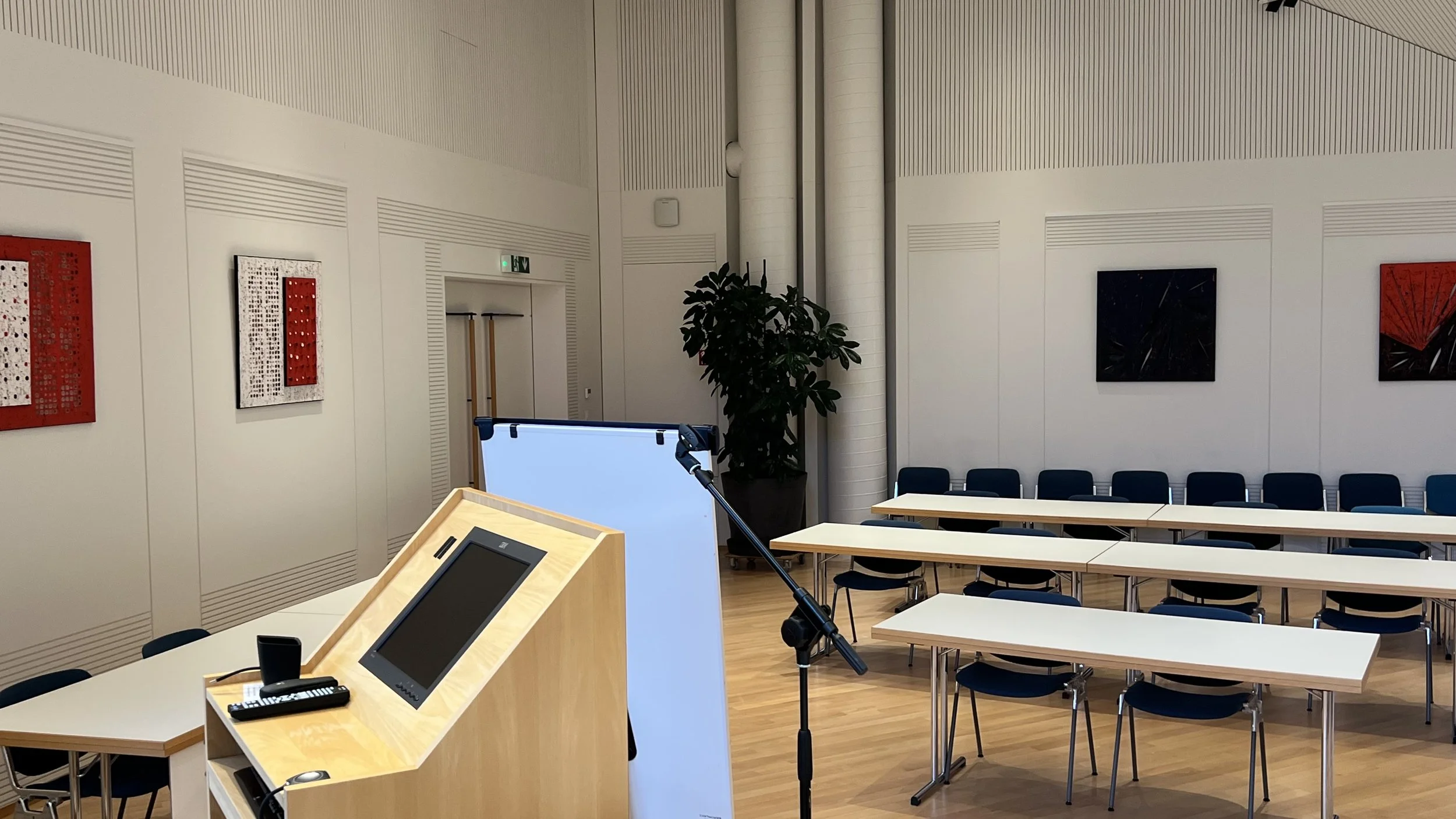
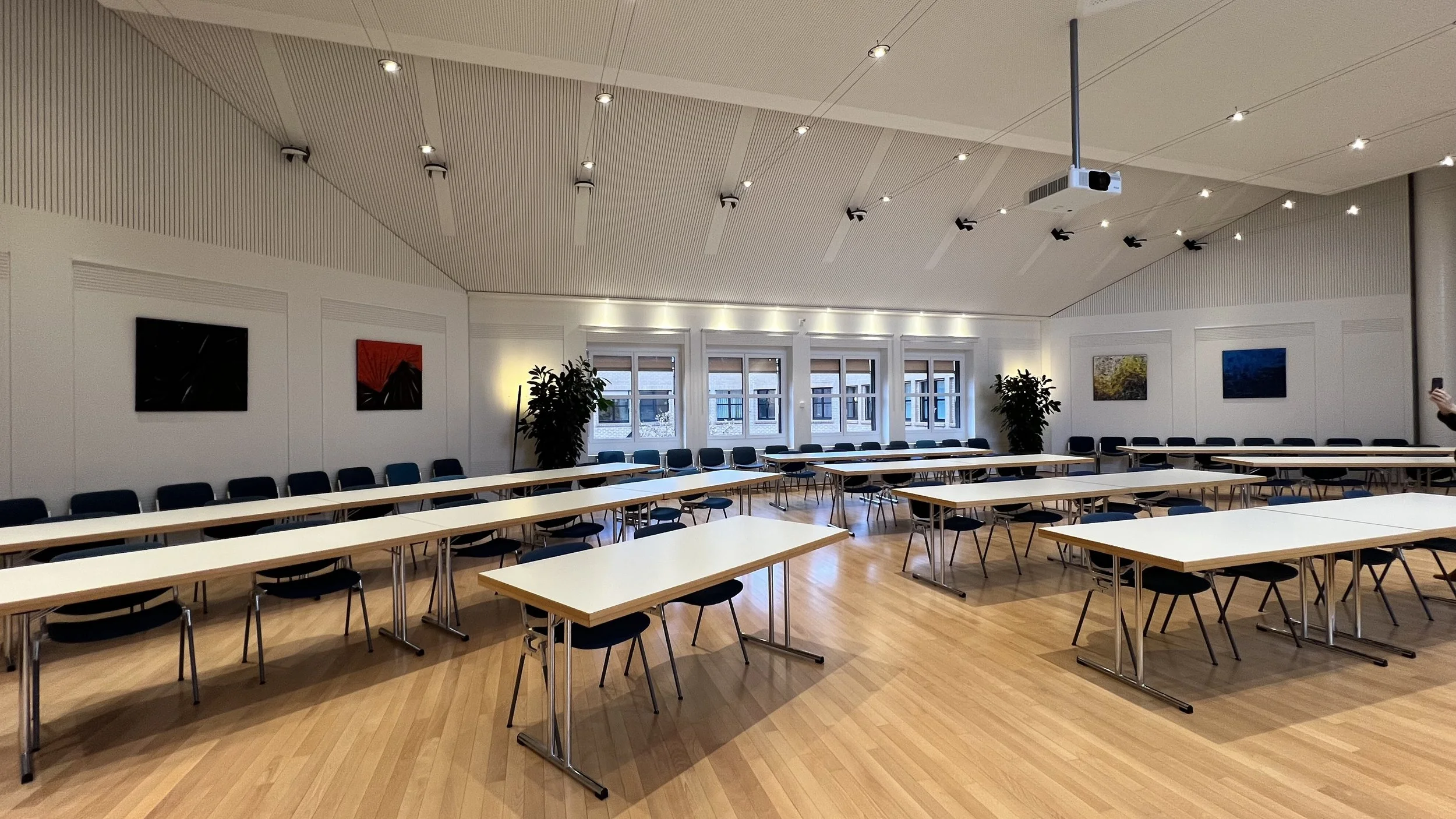
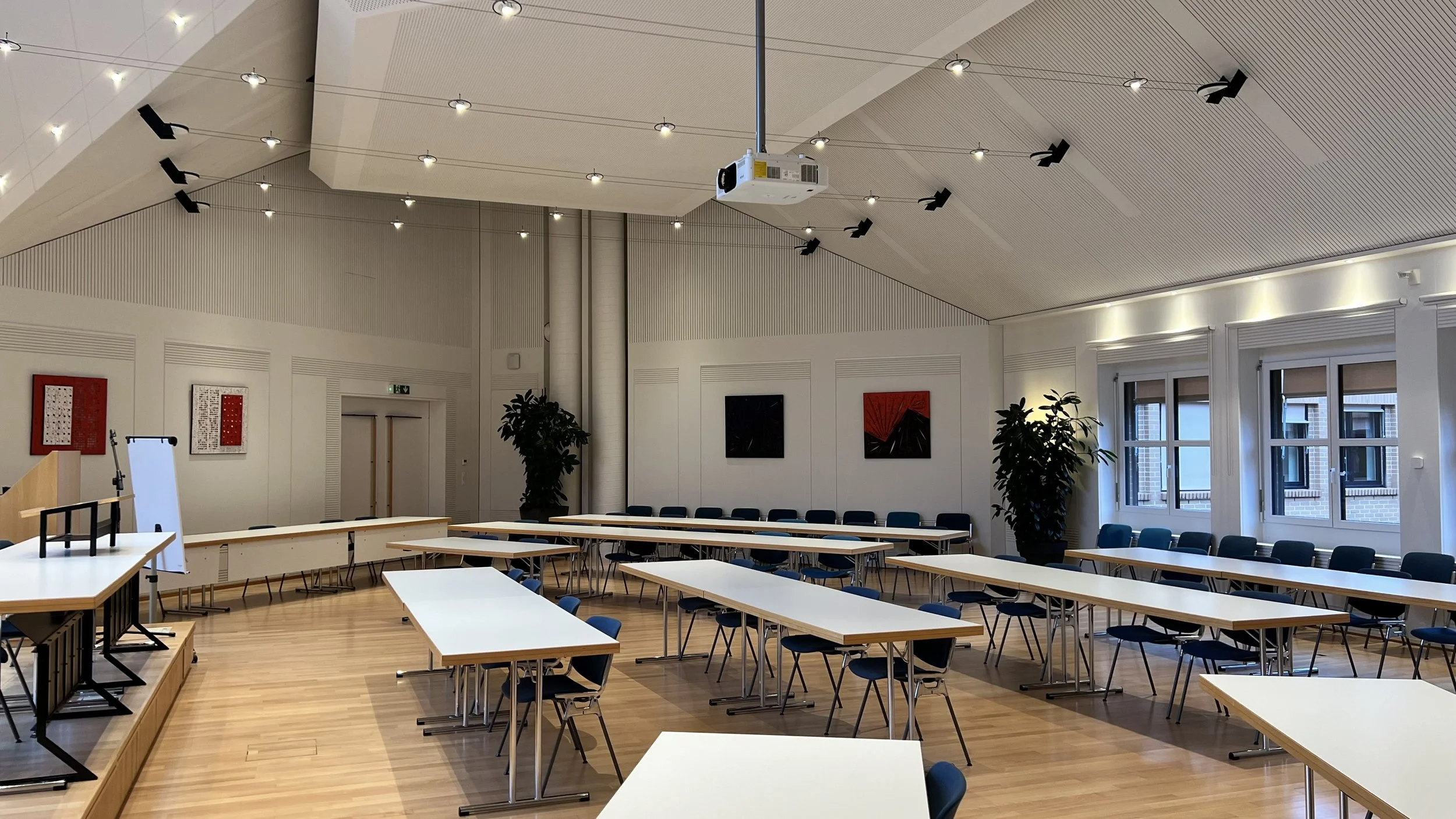
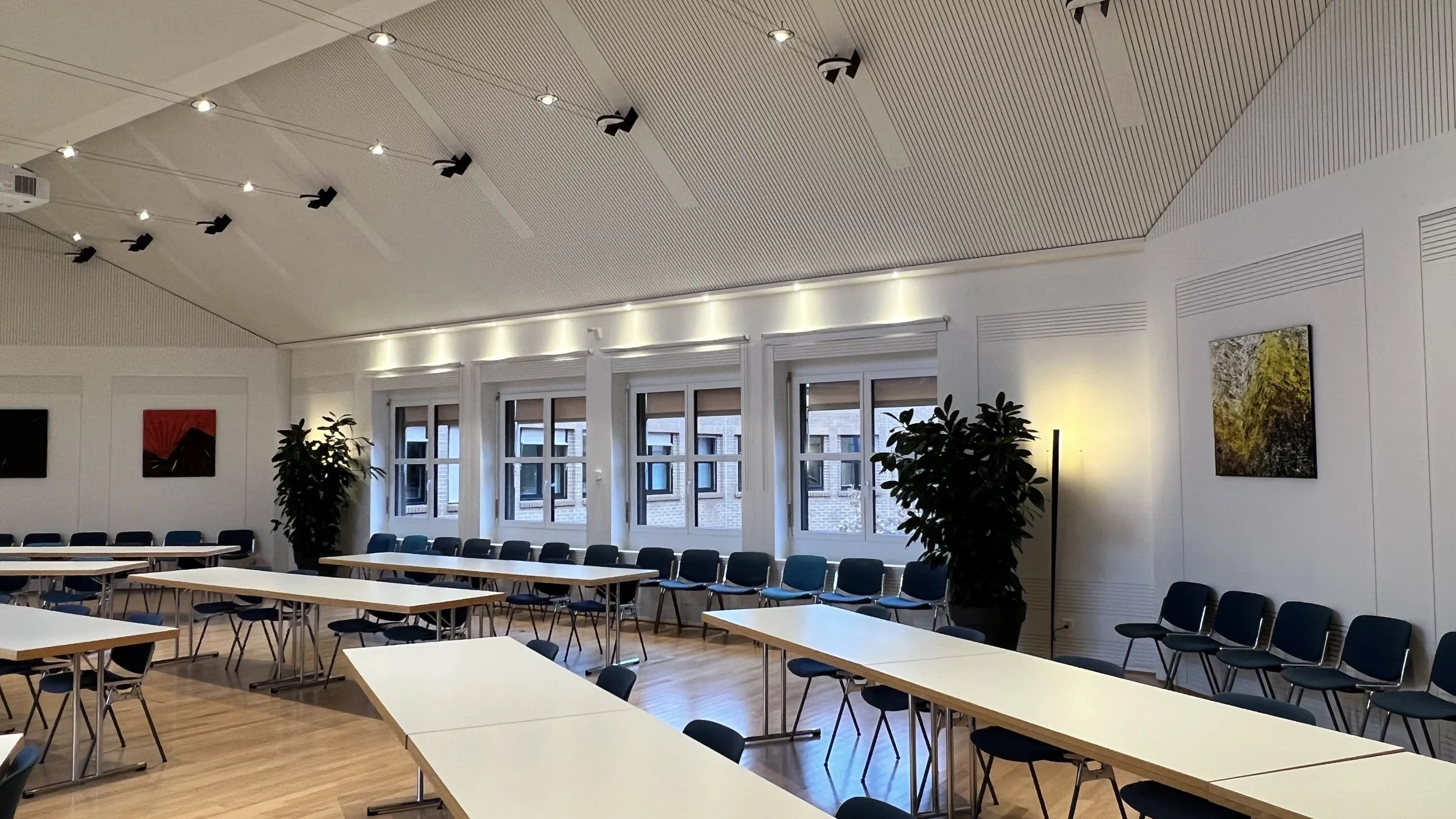
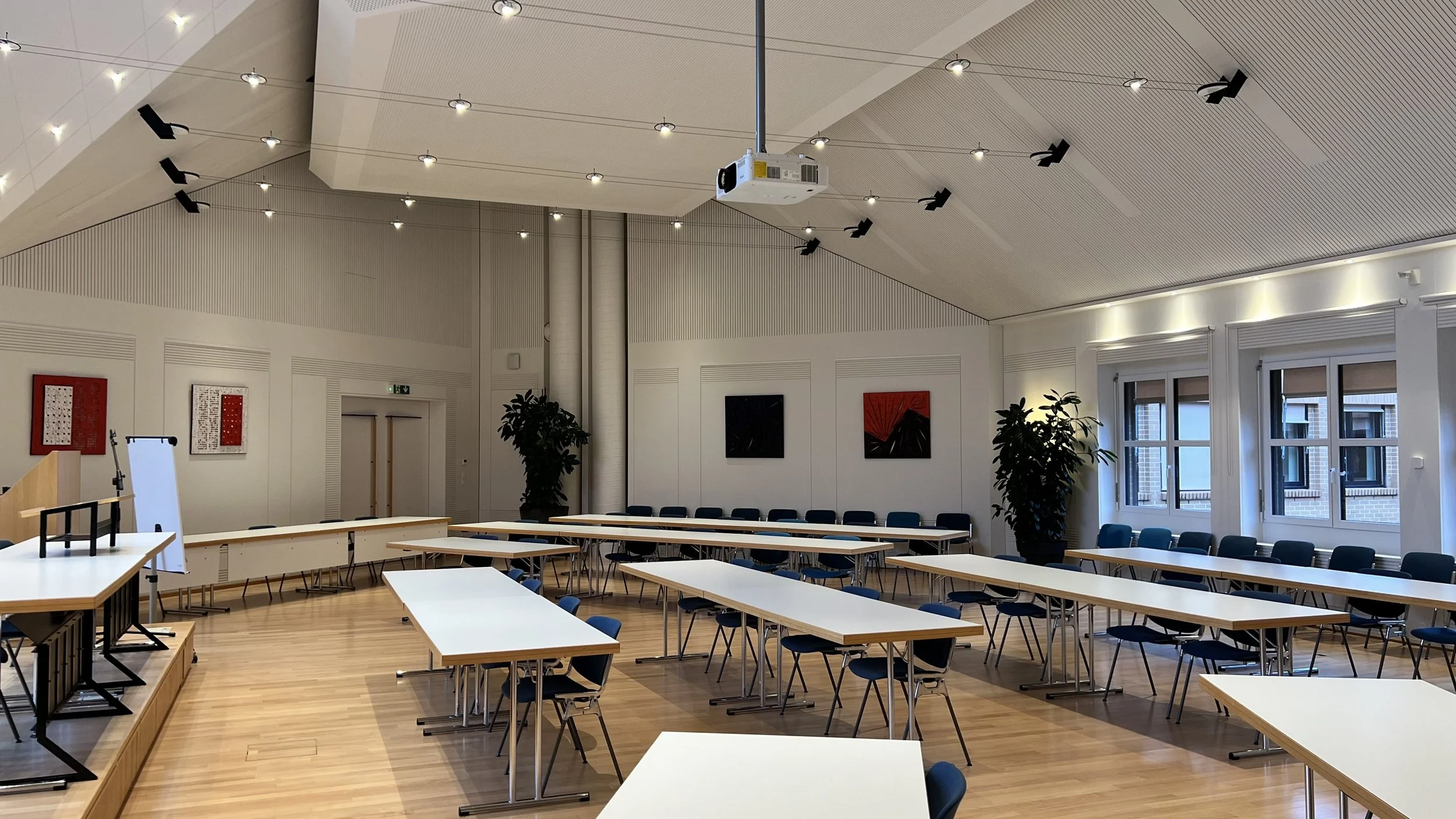
COMMUNAL COUNCIL HALL
EXHIBITION OF a selection
of EIGHT PAINTINGS by
jean-claude bossel
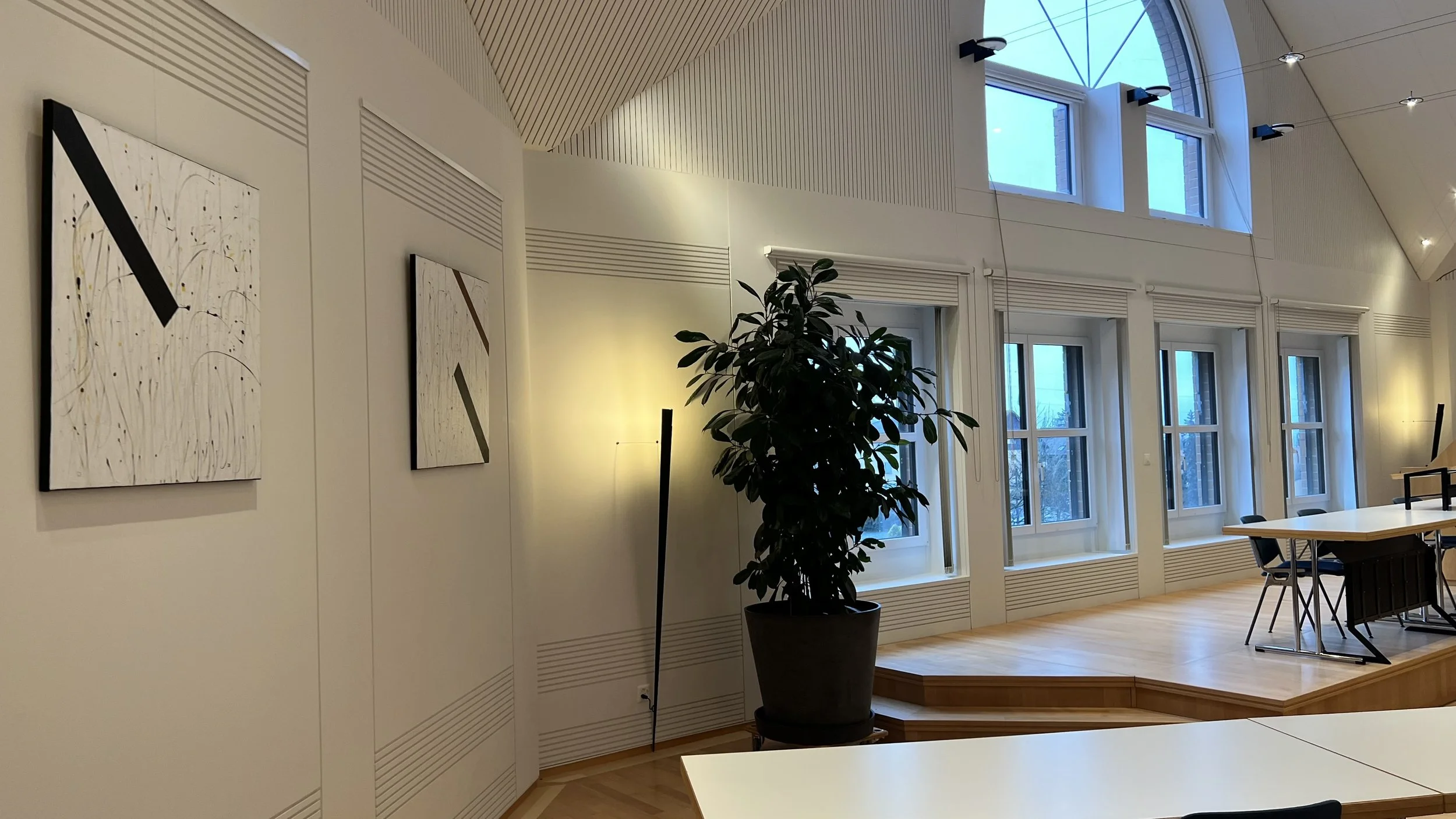
EIGHT REPRESENTATIVE WORKS
FROM THE ARTISTIC JOURNEY
OF JEAN-CLAUDE BOSSEL
The eight paintings presented in this exhibition were selected to illustrate three distinct phases of Jean-Claude Bossel’s artistic production between 2011 and 2026.
Together, they highlight the progressive evolution of his approach, characterised by a sustained dialogue between visual arts, music and mathematics, and by a long-term formal and conceptual research process.
Period 2011–2013
Paintings connected to his earlier activity as a composer of original musical works for choirs, soloists and orchestra, composed approximately ten years earlier (1998–2005).
Period 2015–2017
Works stemming from an interdisciplinary production project combining mathematics, music and painting, entitled PERLES DE VERRE, inspired by the novel The Glass Bead Game by Hermann Hesse, Nobel Prize in Literature (1946).
Period 2018-present
Paintings incorporating hidden messages through graphic processes based on contemporary mathematics (cryptology), forming a coherent body of work referred to as ENCRYPTED PAINTINGS.
Period 2011-2013
TWO PAINTINGS FROM THE SERIES
CANTATE FRANCISCAINE
(PAINTED IN 2011)
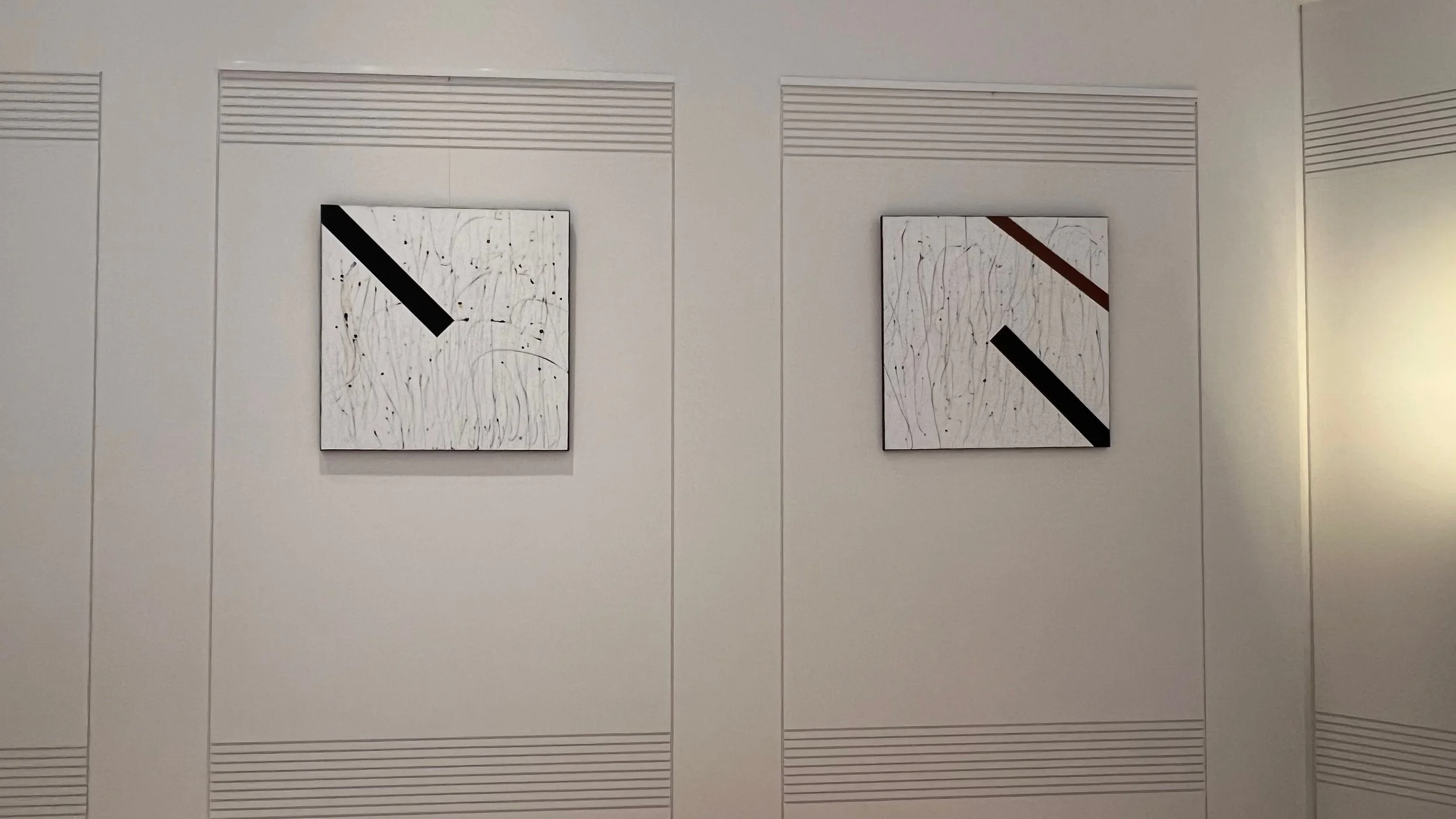
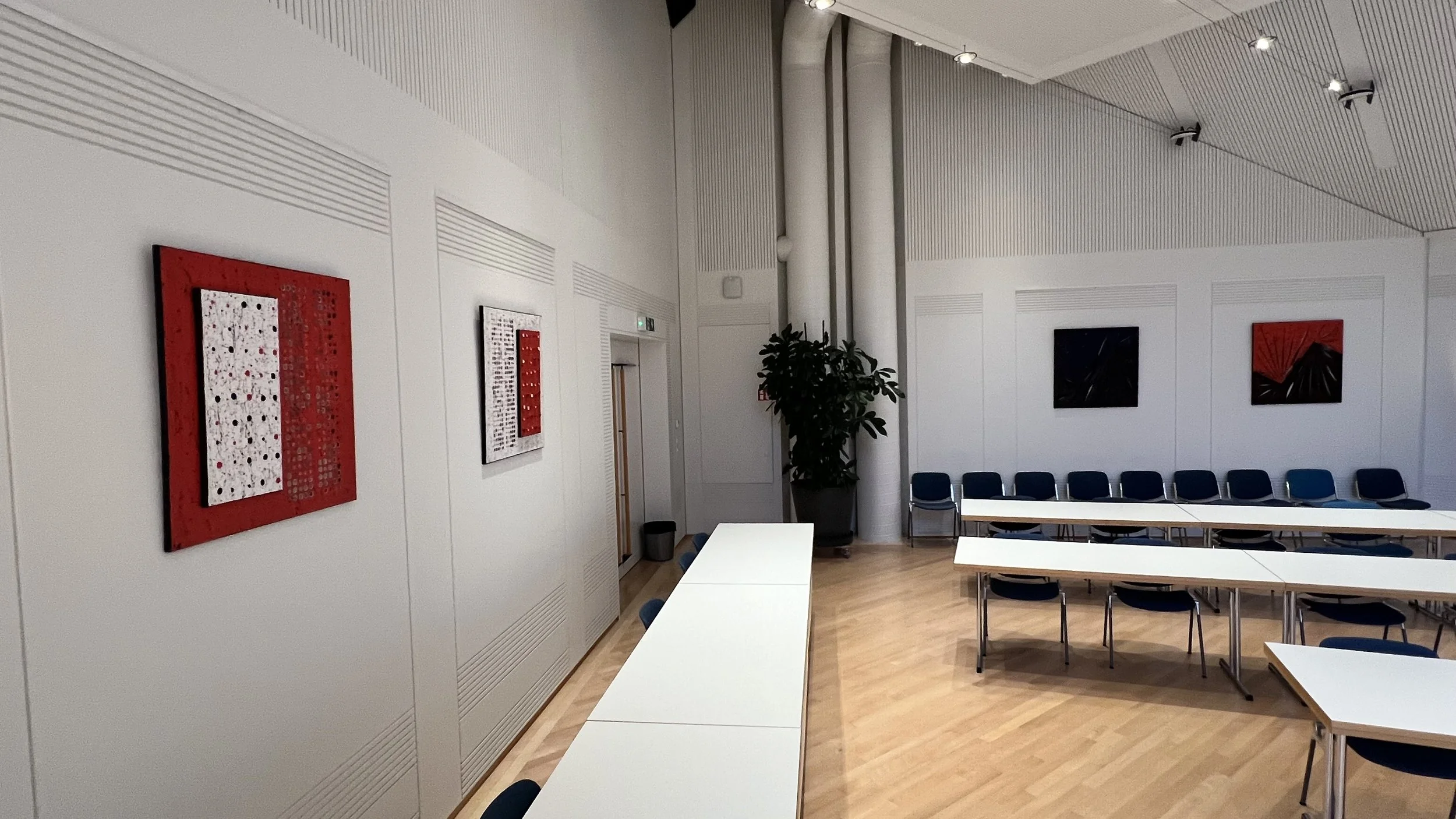
Paintings no.1 and no.2
Series CANTATE FRANCISCAINE
Two paintings of identical format
80 x 80 cm (31.5 x 31.5 in)
Acrylic on canvas, 2011
Paintings no.1 and no.2 belong to a larger group of several dozen works gathered under the title CANTATE FRANCISCAINE.
They were all painted in 2011, ten years after the creation, at the Church of Saint-François in Lausanne, of a musical work entitled PETITE CANTATE FRANCISCAINE for soloists, choir, instrumental ensemble and organ. This cantata had been commissioned from Jean-Claude Bossel in his capacity as composer on the occasion of the 75th anniversary of the Rotary Club of Lausanne.
For the same event, the Rotary Club also commissioned master glassmaker and painter Pierre Chevalley to create two contemporary stained-glass windows for the west façade of Saint-François Church.
Jean-Claude Bossel drew inspiration from the preparatory sketches of these stained-glass windows to develop the generic musical motif of his cantata, premiered in spring 2001. Ten years later, in memory of Pierre Chevalley, who had since passed away, he painted this series by transposing fragments of musical and visual motifs from both the cantata and the stained-glass works into a graphic and pictorial language.
During the period 2011–2013, Jean-Claude Bossel also produced other series inspired by his own earlier musical compositions, generally created approximately a decade before. This includes works connected to CHANTS DE L’AU-DELÀ, premiered at Lausanne Cathedral in 2001, and JUGEMENT DE PÂRIS, also premiered at Lausanne Cathedral in 2005.
PERIOD 2015-2017
FOUR PAINTINGS RELATED TO THE
INTERDISCIPLINARY PRODUCTION PROJECT
PERLES DE VERRE
(pAINTED IN 2015 AND 2016)
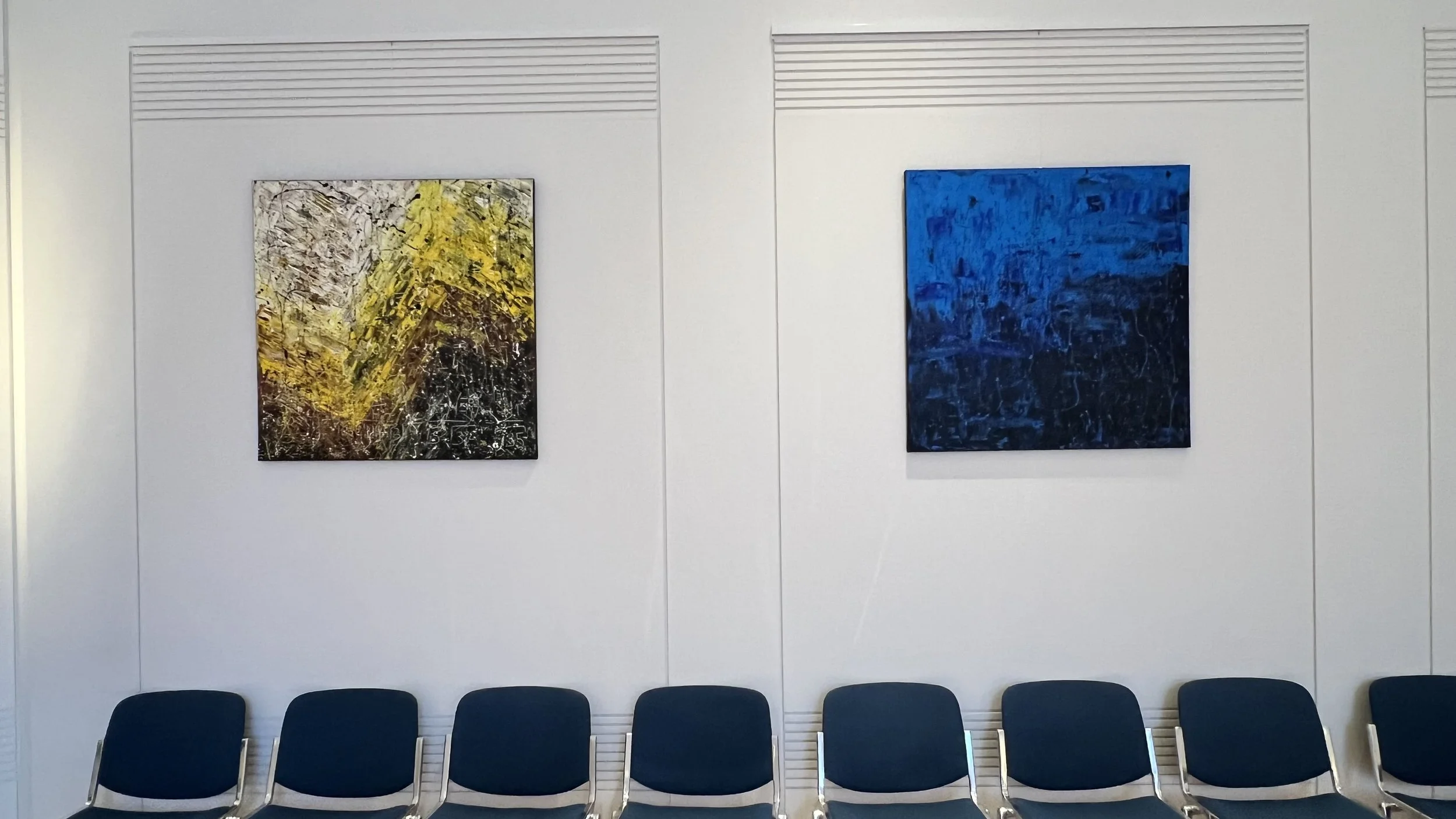
Paintings no.3 and no.4
Painting no.3
Series DROITES II (the yellow painting)
Painting no.4
Series CERCLES II (the blue painting)
Two paintings of identical format
90 x 90 cm (35.4 x 35.4 in)
Acrylic on canvas, 2015 (painting no.3) and 2016 (painting no.4)
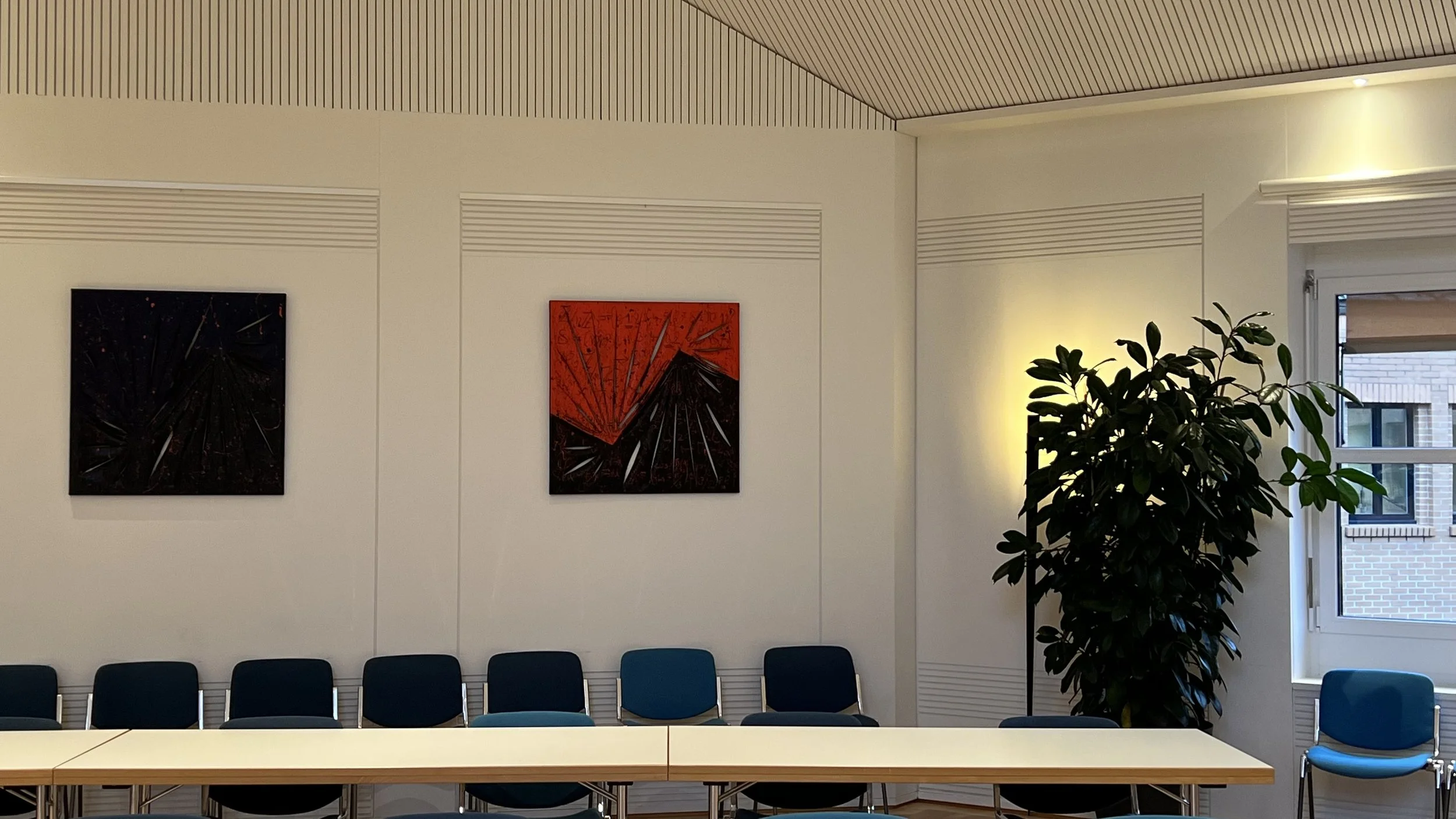
Paintings no.5 and no.6
Series OPUS 28
Two paintings of identical format
90 x 90 cm (35.4 x 35.4 in)
Acrylic on canvas, 2015
Paintings no.3 and no.4 belong to a larger body of work inspired by the novel The Glass Bead Game by Hermann Hesse.
Traces of mathematical equations can be observed on both works. These are equations from analytic geometry involving four fundamental points A, B, C and H, whose coordinates translate into graphic language the four musical notes B-A-C-H (B flat – A – C – B natural) appearing at the conclusion of The Art of Fugue by Johann Sebastian Bach.
This can be understood as a form of artistic-intellectual game devised by Jean-Claude Bossel, comparable to a “Glass Bead Game” combining mathematical equations, musical notes and arrangements of forms and colours from the world of visual arts.
Jean-Claude Bossel devoted an article to this approach in 2011 in the journal PRISMES of the Haute École Pédagogique of the Canton of Vaud, which had appointed him as expert to supervise an issue dedicated to creativity in teaching practices.
Click the button to read this article (in French).
Paintings no.5 and no.6 belong to a series of twelve works of identical format inspired by String Quartet Op. 28 by Austrian composer Anton Webern (1883–1945).
Traces of mathematical writing are visible, related to different approaches to the number 12 in mathematics, directly referencing the principle of dodecaphony (twelve-tone music) and the serial techniques developed by composers of the Second Viennese School, particularly Anton Webern.
The twelve-tone series used by Webern in his String Quartet Op. 28, premiered in 1938, is structured around a four-note musical motif corresponding precisely to the B-A-C-H motif mentioned in the description of paintings no.3 and no.4. In this respect, paintings no.5 and no.6 also form part of the PERLES DE VERRE body of work.
The OPUS 28 series was also used as visual material for the covers of a collection of mathematics exercise booklets intended for upper secondary education. This collection, written by Jean-Claude Bossel between 2006 and 2015, has been published and distributed since 2020 by Éditions Loisirs et Pédagogie in Le Mont-sur-Lausanne.
PERIOD 2018–PRESENT
A DIPTYCH COMPOSED OF
TWO ENCRYPTED PAINTINGS
FROM THE FAKE NEWS SERIES
(pAINTED IN 2021)
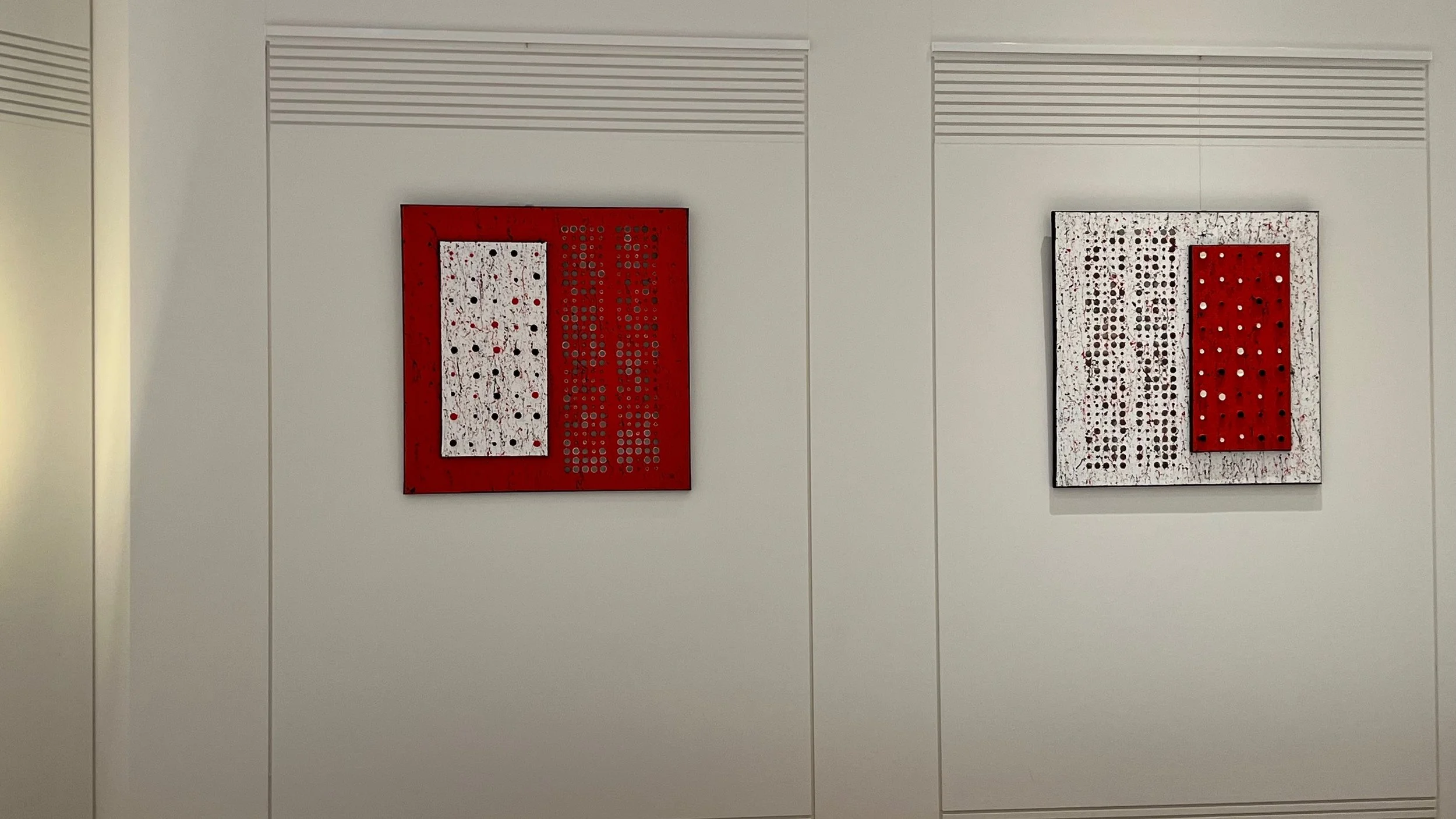
Paintings no.7 and no.8
Series FAKE NEWS
Two paintings forming a diptych
Two panels, each 80 x 80 cm (31.5 x 31.5 in)
Acrylic on canvas, 2021
Paintings no.7 and no.8 form an inseparable diptych belonging to a broader group of several dozen paintings or diptychs gathered under the title FAKE NEWS.
Perforations of two distinct diameters can be observed: the small hole symbolises the digit 0 of the binary code, well known in computer language, while the larger hole symbolises the digit 1. The arrangement of these perforations forms sequences of binary numbers corresponding to encrypted messages.
This diptych was first presented in Barcelona in 2022 in a partner gallery, and again in December 2023 at an international art fair in Barcelona, in collaboration with the same gallery.
DO YOU WISH TO TRY
TO DECODE THE HIDDEN
MESSAGES IN THIS DIPTYCH?
Ask a mathematician, if you happen to have one nearby: they will confirm that decrypting a hidden message without knowing the encryption method is far from simple.
Even when the encryption process is identified (sometimes very classical, such as the Vigenère cipher, Hill matrices or other well-known methods), one must still possess the correct decryption keys (or the correct “PINs”, to use a familiar analogy).
With this in mind, what are the encrypted messages contained in this diptych?
What do these small holes signify?
One may also question the alternation of colours: do the black/red and red/white sequences correspond to additional layers of encryption?
Could there be further hidden messages within the diptych?
The answer is yes. But how does it function?
This is precisely where the concept of a CRYPTO CHALLENGE emerges.
THE CONCEPT OF
ENCRYPTED PAINTINGS
BY JEAN-CLAUDE BOSSEL
As both artist and mathematician, Jean-Claude Bossel has developed over several years what he designates as ENCRYPTED PAINTINGS: works incorporating hidden messages encoded through graphic processes protected under the registered trademark CODE BACH®.
These paintings associate visual arts with contemporary mathematical languages omnipresent in our daily environment (computing, cybersecurity, blockchain, artificial intelligence, etc.).
Some of these paintings may be associated with CRYPTO CHALLENGES, that is, decryption systems based on the analysis of the graphic elements visible in the works.
BACK TO THE
NEWS PAGE
Click on the button.